Where Can You Buy Shoulder Style Carry Straps
The Definitive Guide that You Never Wanted: Shoulder Straps
The defining feature of a backpack is some sort of bag or compartment attached to shoulder straps. These suckers are what keep the bag on your back, so yeah, they're pretty important. There are several characteristics of shoulder straps that may affect how you decide which to buy/use. We'll take an in-depth look at the different attributes of shoulder straps, including the materials and components used to make them, the shape they take, additional straps that help support the weight, and other innovative/supplemental features of shoulder straps. If you're brave (or bored) enough to read through all of this, then by the end you'll have a solid idea of what your perfect shoulder straps would look like.
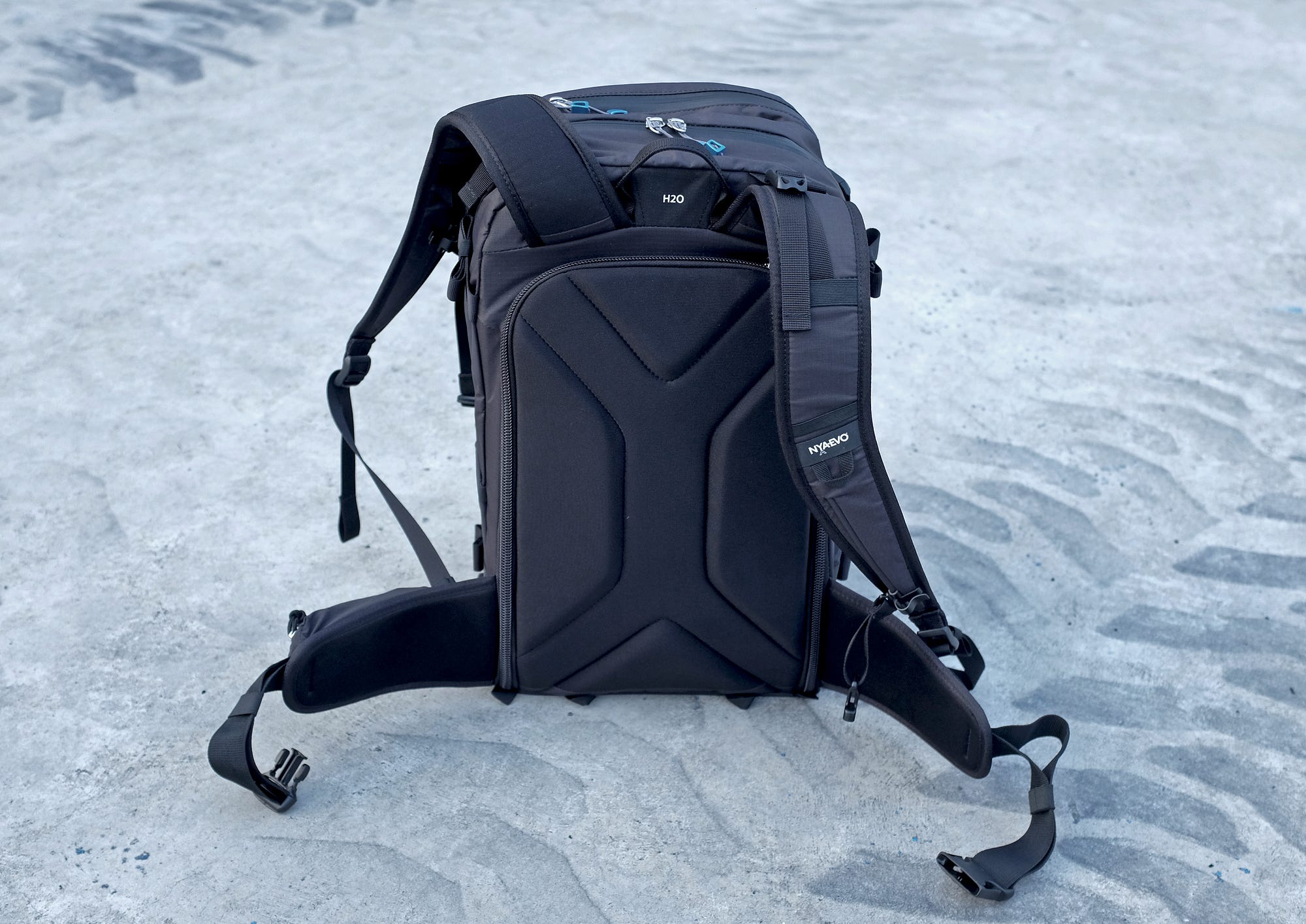
What to look for:
There are a plethora of different types of shoulder straps and combinations of add-ons. So before you dive into a few thousand exhaustive words that no one really wants to read, here is a summary with a brief guide on what to look for in in shoulders straps for various scenarios. We'll also publish a much more condensed version shortly for those of you who don't need all the nitty gritty details.
TL;DR —
Long treks / multi-day trips
- Thick, comfortable but supportive padding (e.g., dual density foam or EVA)
- Contoured shape for more comfort and to reduce muscle fatigue
- Sternum strap with fully adjustable height
- Stabilizer / load-lifting straps
- Adjustable back/torso length if the bag is not perfectly fitted to your size
Day hikes / outdoor activities:
- Contoured shape for more comfort and to reduce muscle fatigue
- Sternum strap with fully adjustable height
- Stabilizer / load-lifting straps if you will be carry heavier loads
Everyday carry, school, and work: You're going to be wearing this thing nearly every day so comfort is the biggest factor
- Binding along the edges of the shoulder strap that allows a flatter and lower profile
- Sternum strap if you may be carrying heavier items like a large laptop or books
Travel / carry-on bags
- Sternum strap for those days when you're sprinting through an airport to catch your flight
- Straps that can be stowed to reduce clutter and improve portability
For those of you who are interested in the reasoning behind these recommendations… onto the minutiae.
Design (Shape)
The shape of the shoulder straps is one of the first things you notice and can affect how comfortable a backpack feels on your shoulders. The shapes you'll likely see on backpacks are straight, contoured, and a bridged strap. As the names might suggest, contoured straps are curved more similarly to our bodies, either in a single outward curve (like a crescent) or a shallow S-curve that curves inward just above the sternum, then back outward below your arms. Straight straps, on the other hand are more… well… straight. Contoured straps can reduce the amount of rubbing between your body and the straps and reduces pinching around your trap muscles by shaping around them instead of going over them. Most school bags and laptop backpacks have at least a small amount of contouring in their straps, while fashion-focused bags are more likely to be straight. Bags with large volumes intended for heavier loads, such as hiking packs or trekking bags, are expected to have the most contoured shape.
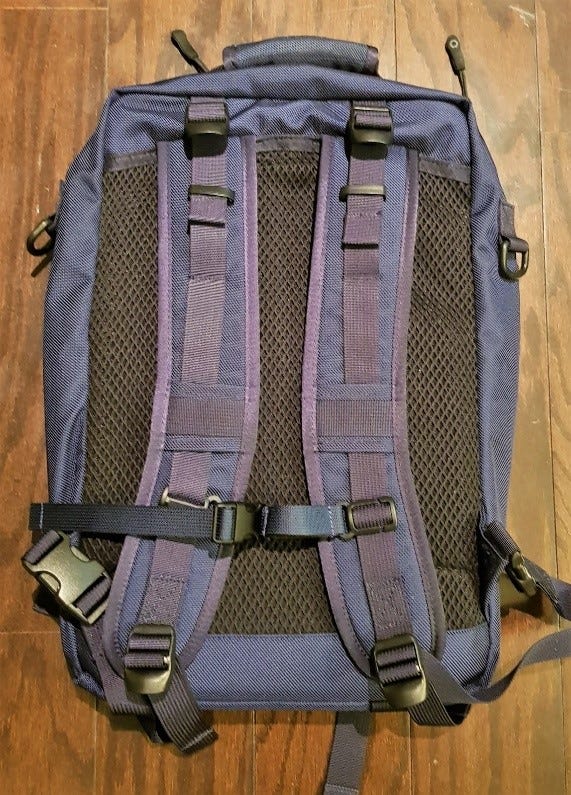
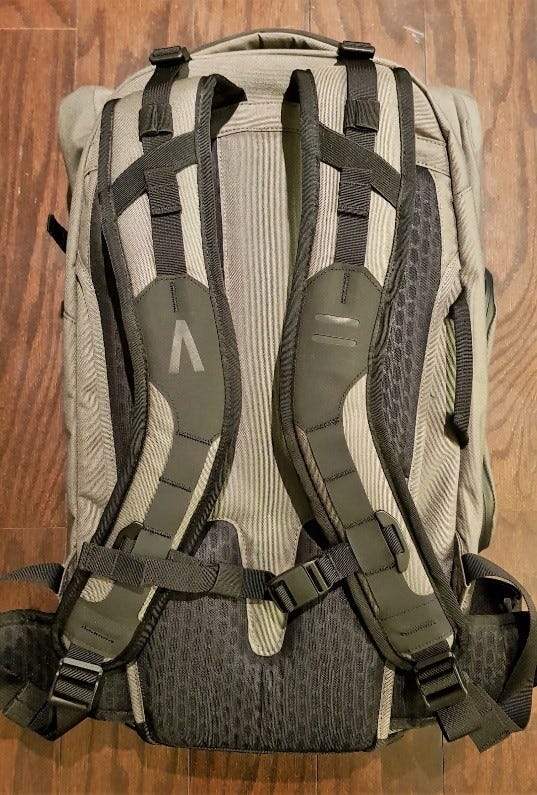
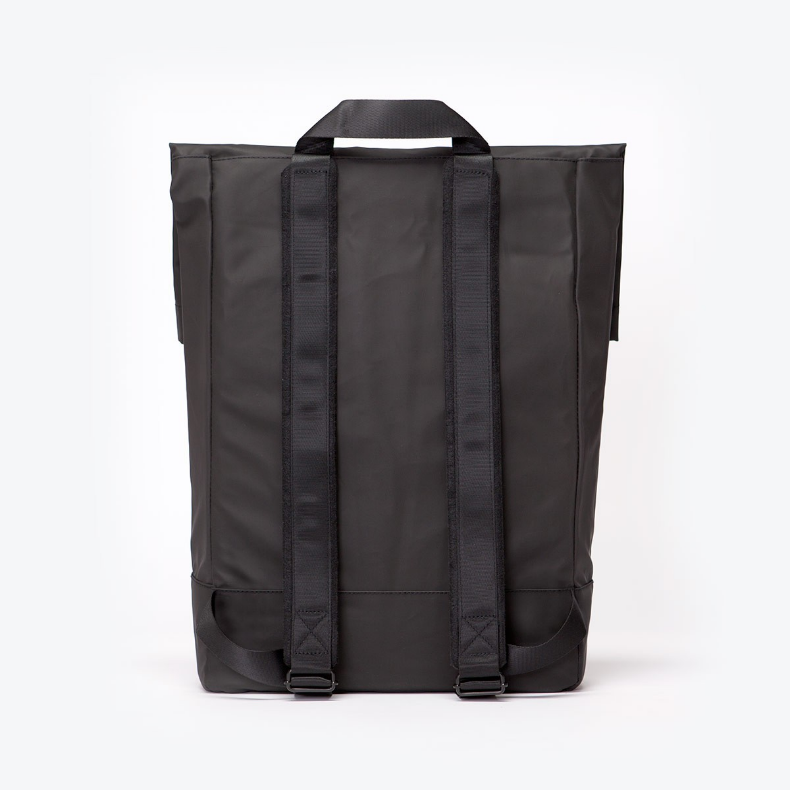
A third type of common strap is the single-piece bridged strap, where the two shoulder straps are actually one piece and connect near the top. While manufacturers may market these as a "haul loop", they have a couple noteworthy disadvantages. First, the bridge prevents you from wearing the backpack very high on your back. Some people prefer to wear their backpacks lower so this isn't an issue, but others may find that the bridge forces them to wear the bag lower than desired. Secondly, having the bridge means the width of space between the straps is fixed and the straps cannot stretch any wider than the bridge allows. If the bridge is too long, the straps won't stay secure and may slip around your shoulders. If the bridge is too short, it will pinch around your neck muscles. It's a Goldilocks situation and if going with this style of shoulder straps you'll have to find the one that's juuuust right.
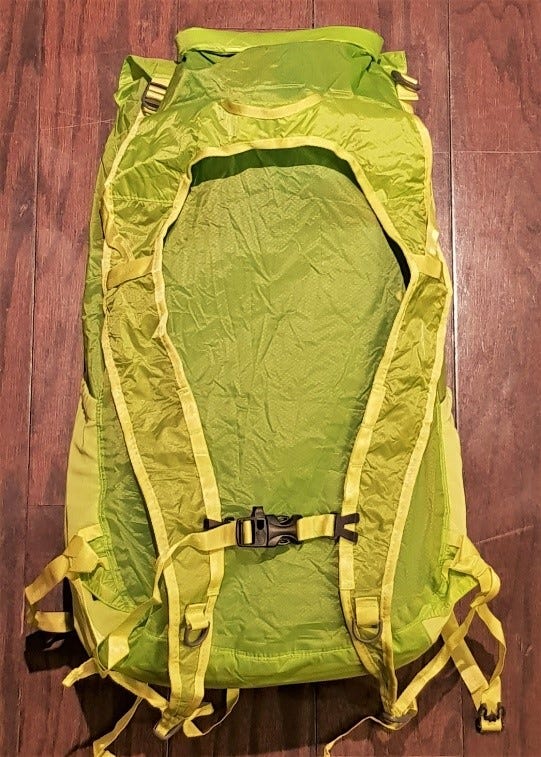
In addition to the shape of the shoulder straps, the width of the strap itself also plays a role in how comfortable a backpack is. The wider the strap is around the points of contact with your shoulders, the more effective it will be at distributing the weight, as it increases the strap-to-shoulder surface area. Narrow straps put a lot of weight on a concentrated area of your shoulder. However, overly wide straps can push and rub against your armpits or the sides of your neck. Pinching around your neck is also affected by how closely the top of the shoulder straps are anchored to each other. If they're too close to each other, there isn't enough space for your neck.
The last dimension of a shoulder strap's shape is the thickness. The type of padding used in the straps often influences this metric. Open-cell foam is not as condensed as closed-cell foam and thus the straps are normally thicker. On the other hand, closed-cell foam, because it offers more support and is denser, normally yields a flatter strap. Dual-density and EVA will likely be on the flatter side of the spectrum as well. Keep in mind that even though they're flatter, they can still offer more support than thicker straps made of open-cell foam (more on the padding below). Large backpacks that are intended for extended periods of use and heavy loads, such as hiking packs, will use thick amounts of EVA or dual-density padding. Flatter straps also have a binding stitched along the edges to help keep the low profile.

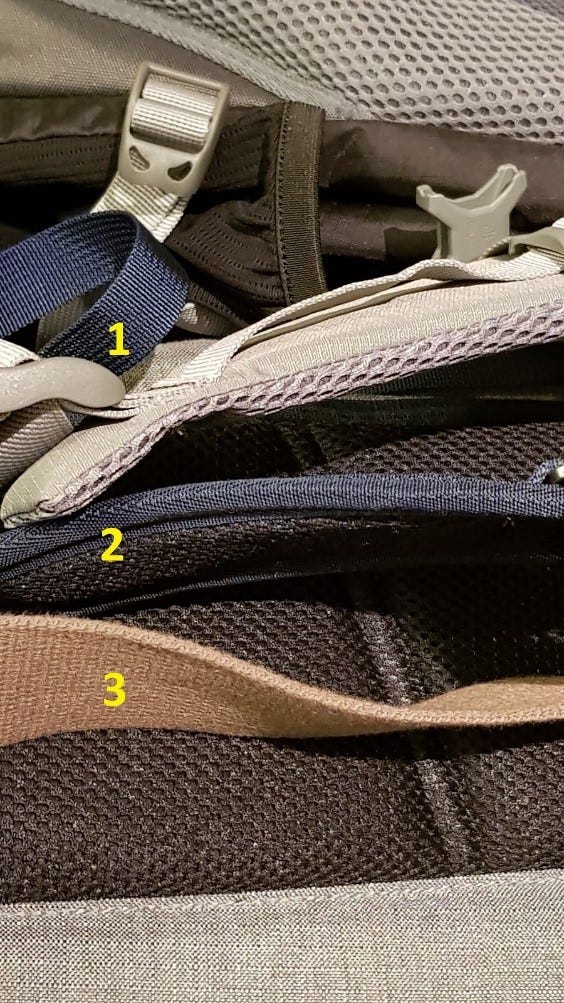
Materials & Construction
PADDING & FABRIC
The primary material on the shoulder straps that we pay most attention to is the padding since it significantly impacts how comfortable the backpack feels on our shoulders. While some people may opt for the thickest padding, many other factors affect how the shoulder straps feel. The typical types of padding you might find include open-cell foam, closed-cell foam, dual-density foam, and EVA.
To read up on the details of the different foams, check out our guide to foam padding. But here's the gist of it:
Open-cell foam is very soft and compressible. Under the weight of a loaded backpack, the foam will compress to the point of being ineffective at providing any comfort and padding. Feels great for featherweight loads, but subpar for normal backpack use and should definitely be avoided for bags with larger volumes.
Closed-cell foam (also called Ensolite) is more suitable for padding on the straps, as it does not compress as easily as open-cell foam. Backpacks will frequently use a closed-cell foam in the shoulder straps while lining the back face with open-cell foam to provide more comfort (i.e., dual density foam).
Another type of foam that is often used in backpacks today is EVA (Ethylene-vinyl acetate) foam, also known as PEVA (polyethylene-vinyl acetate) foam. It's a very good material to use for backpack padding as it is higher in density, durable, and retains its shape well. You may have noticed some higher-end backpacks using a type of EVA called Zotefoam that has a more even distribution of density throughout the material.
Occasionally, you may also come across backpacks whose straps are devoid of all padding. For example, a strap may be made entirely of canvas (e.g. the Fjallraven Kanken). These types of straps do not provide any padding and are usually just for the sake of fashion and style, or to minimize the cost of manufacturing.
While some of the fabric around the padding is typically the same material as the rest of the backpack, mesh lining can make a bag feel more comfortable against your skin. Some bags use airmesh, which allows air to flow through, slightly improving breathability. However, the downside of airmesh is it can feel abrasive and all types of mesh can allow dirt, sand, or other particles to get in.
BUCKLES & STITCHING
Another piece that you'll see on virtually every shoulder strap is the adjuster buckle, used to adjust the length of the shoulder straps. These come in various sizes but typical ones might be between 0.5 to 2 inches and are used to adjust the length of the shoulder straps. While it seems like there is not much to them, there are surprisingly a good number of things to notice. The adjuster buckle should hold the webbing straps securely enough so that the shoulder straps don't constantly change sizes unintentionally, but not so tight that they become a hassle to adjust. Most of these buckles will have a rounded point on the bottom edge that can be lifted upward to easily loosen the shoulder straps. These buckles are typically made of plastic, but some bags use stainless steel or aluminum buckles. Plastic is suitable for all intents and purposes, but it's possible to end up with cheap plastic that breaks under a full load or under my body weight. Backpacks end up on the ground a lot and it's pretty easy to accidentally step on the strap.

Arguably, the most important structural part of shoulder straps is the stitching. The entire strap is only as strong as its weakest point. So if the stitching is done very poorly, it does not matter how strong your buckles or the strap materials are. Typically, x-box stitching and multi-bar track stitching is used to join the webbing to the shoulder strap and the body of the bag. The good news is you don't find many backpacks where the stitching is too weak or poorly done. Some bags will also have reinforced stitching at the points where the straps are anchored to the bag. However, these are often difficult to see as they might be in between the layers of the backpack's fabric.
Additional Straps
In addition to the main adjusting straps, many backpacks have sternum straps and stabilizer straps:
The purpose of the sternum strap is to disperse the weight of the backpack, preventing your shoulders from getting too sore, and to keep the shoulder straps in place ensuring that they do not slide off your shoulders. The tighter the sternum strap is the more weight is displaced. On the other hand, if a sternum strap is too tight, it can start to constrict your breathing and pinch your neck around your trapezius as well as your chest muscles. While some sternum straps are fixed, most are adjustable in width across your chest via adjuster buckles and in height.
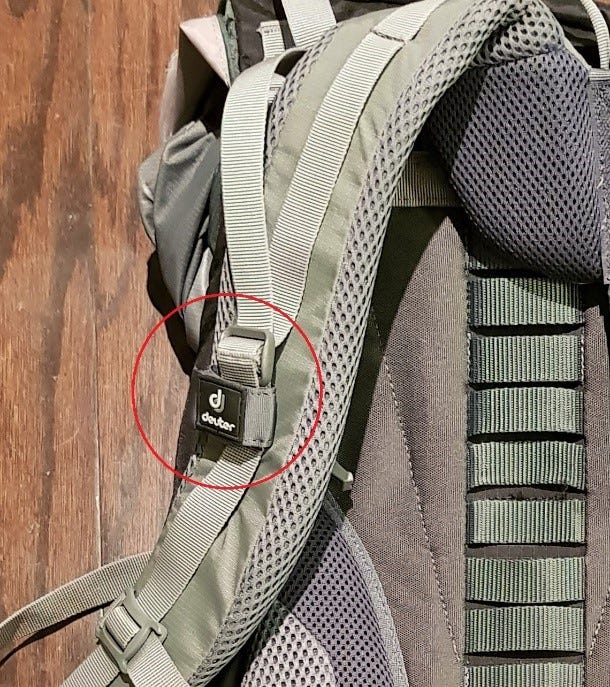
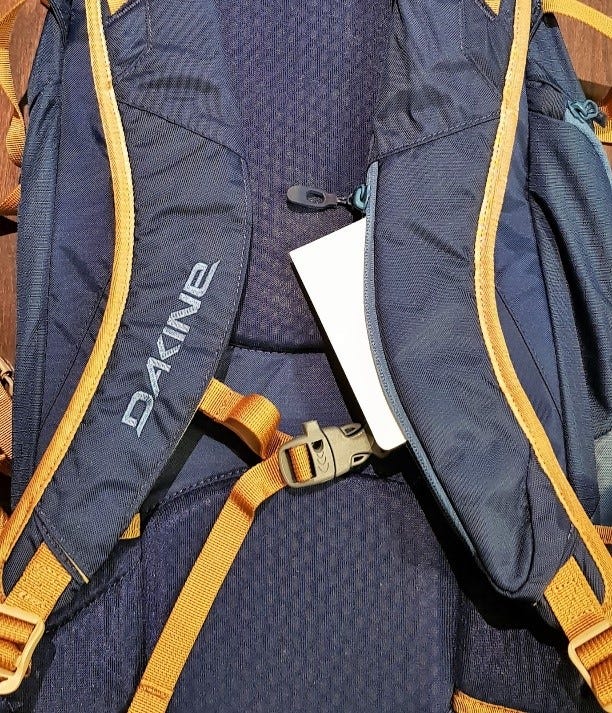
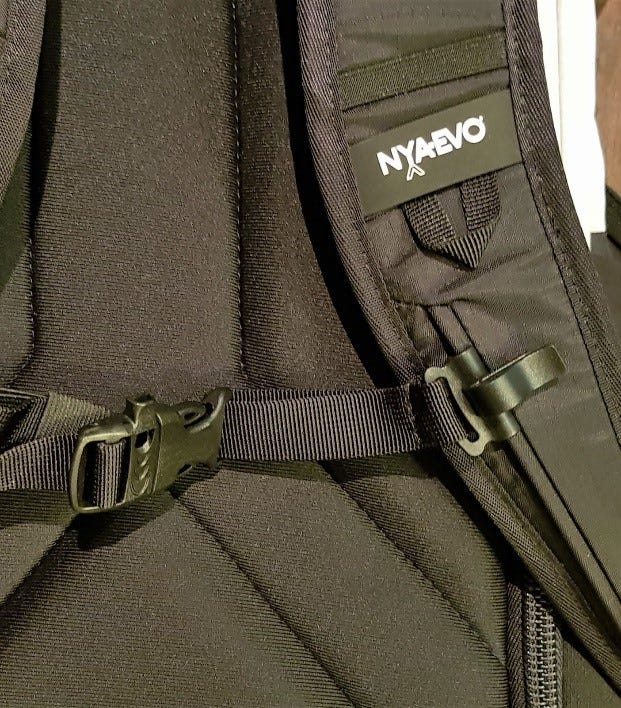
A few different systems are used for the height adjustment. The most common is to have a webbing strap run all the way up along the padded portion of the shoulder strap and an adjuster buckle that joins the sternum strap perpendicularly to the webbing strap. This gives the maximum number of height options as you can change the height to be as high or low as you want. However, it can be difficult to use. Another method is to have the sternum straps attached to a pipe/rail on the strap. This also allows you to completely customize how high you want the sternum strap and is easier to adjust. On the other hand, these can break if enough force pulls the sternum strap off the rail. It's not easy to do but it has happened to me once before and I have not been able to remount the sternum strap to the rail. A third system utilizes removable sternum straps and PALS (pouch attachment ladder system) webbing or daisy chains that run vertically along the shoulder strap. PALS is used in the MOLLE (modular lightweight load-carrying equipment) webbing that you see on the packs of armed forces. The main drawback with these is that the sternum strap can only be adjusted to a fixed set of positions, so you don't have as much flexibility in exactly how high you want the strap. On top of that, they are more of a hassle to adjust since you have to remove and reattach the sternum strap on both sides (but on the plus side, they are completely removable).

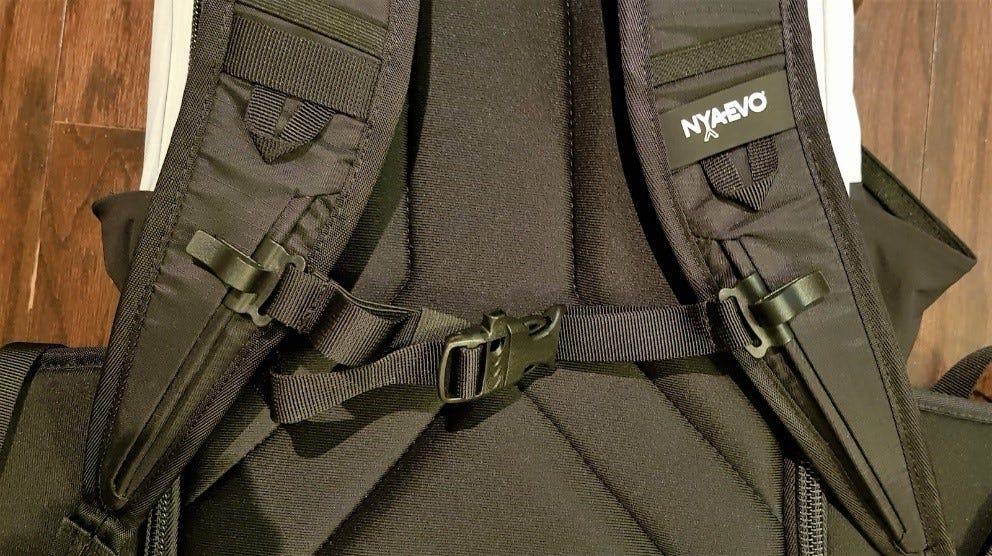
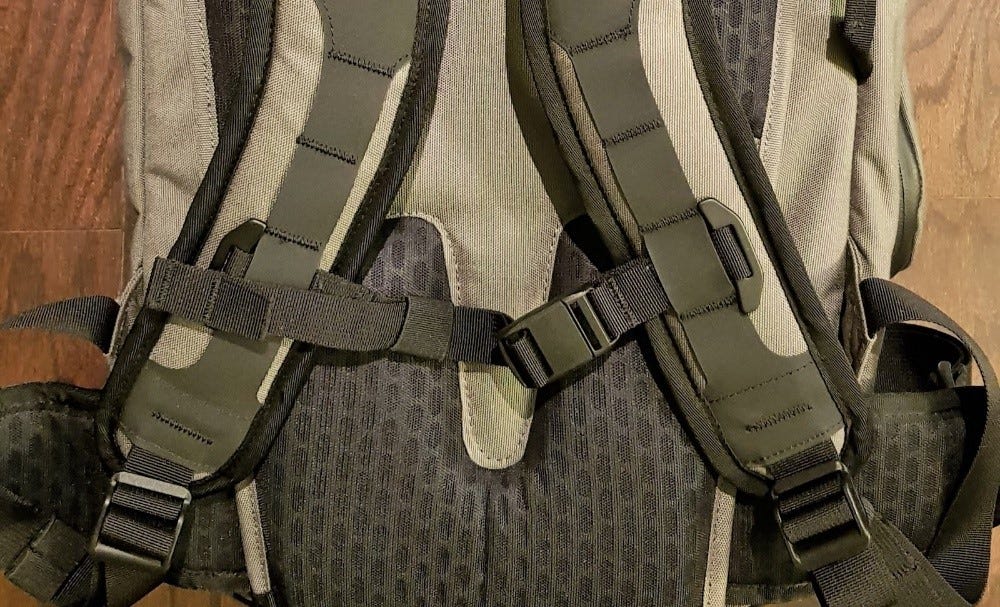
When trying out new backpacks, you will want to make sure that the sternum strap can reach a height that is comfortable for you. As a general rule of thumb, your sternum strap should be roughly an inch below your collar bone. One neat feature that some bags have is the ability to stow away sternum straps when they're not in use through clips on the shoulder straps that hold them in place or lash points that can hold them down so that they're not flapping all over the place when not in use.
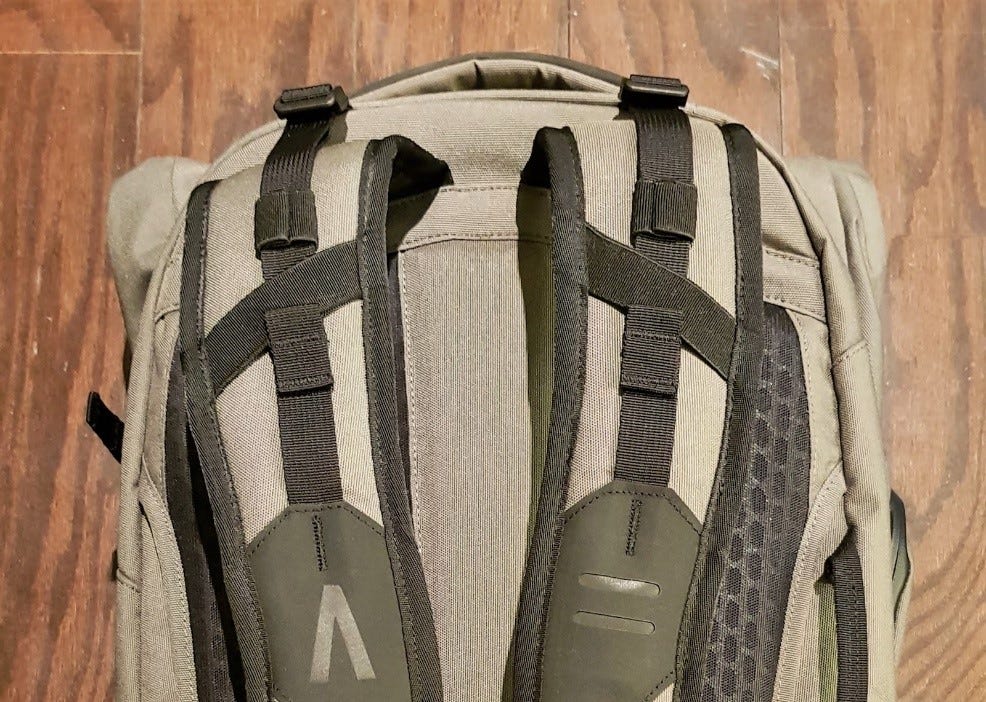
You'll notice that some backpacks also have an additional set of adjustable straps that connect the upper portion of the shoulder straps to an anchor point near the top of the backpack. These stabilizer straps, or load-lifting straps, are used to provide further support for your shoulders by pulling the bag forward. While they are crucial for long hikes or carrying heavier loads, they're not necessary for smaller backpacks unless it's full of rocks. To be effective, the stabilizer straps need to be anchored to the right places. If they're attached too close to the top of the shoulder strap, there won't be enough leverage to pull the bag forward. Ideally, the stabilizer straps should form a 45-degree angle from the back panel of the bag. When the stabilizer straps are very long, they can start swinging all over the place as you move. Lash points that keep the excess straps out of the way are easy ways to prevent them from driving you insane.
Supplemental Features and Add-ons
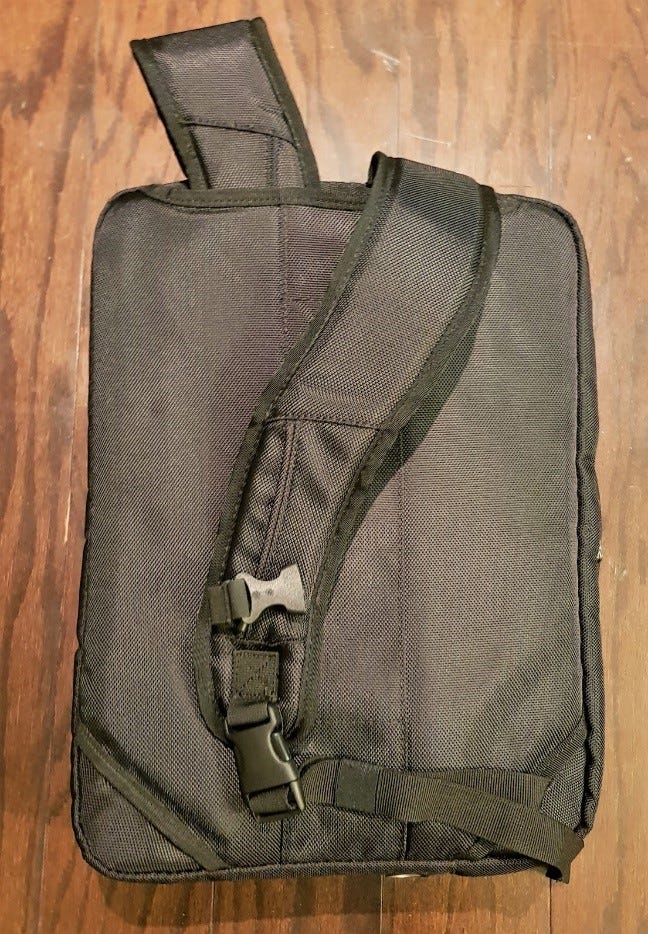
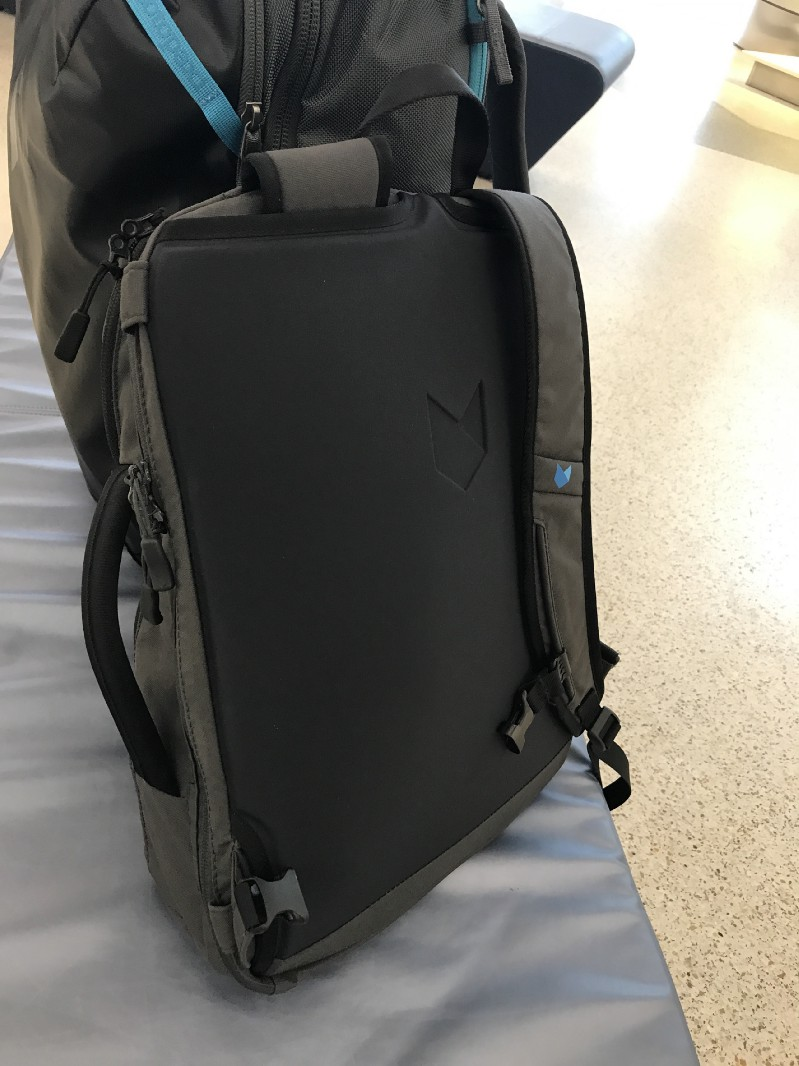
If you start looking at higher end bags, you will also start to find some really cool and unique features. As modular bags become more popular, so too does the stowable strap. Some bags, like the Minaal Daily have shoulder straps that detach at one end and can be tucked away underneath the back panel so that the backpack takes on a form of a soft briefcase. This also comes in handy for travel when you just want the straps out of the way. For example, when you store the bag at your feet on a flight, stow the shoulder straps away to reduce clutter and prevent your feet from getting tangled up. While this is a convenient feature, it is typically only possible with flatter straps. Thick straps are simply too bulky to hide in the same way. Therefore, this is a feature in everyday-carry bags or carry-on travel bags, but not likely seen in hiking backpacks.
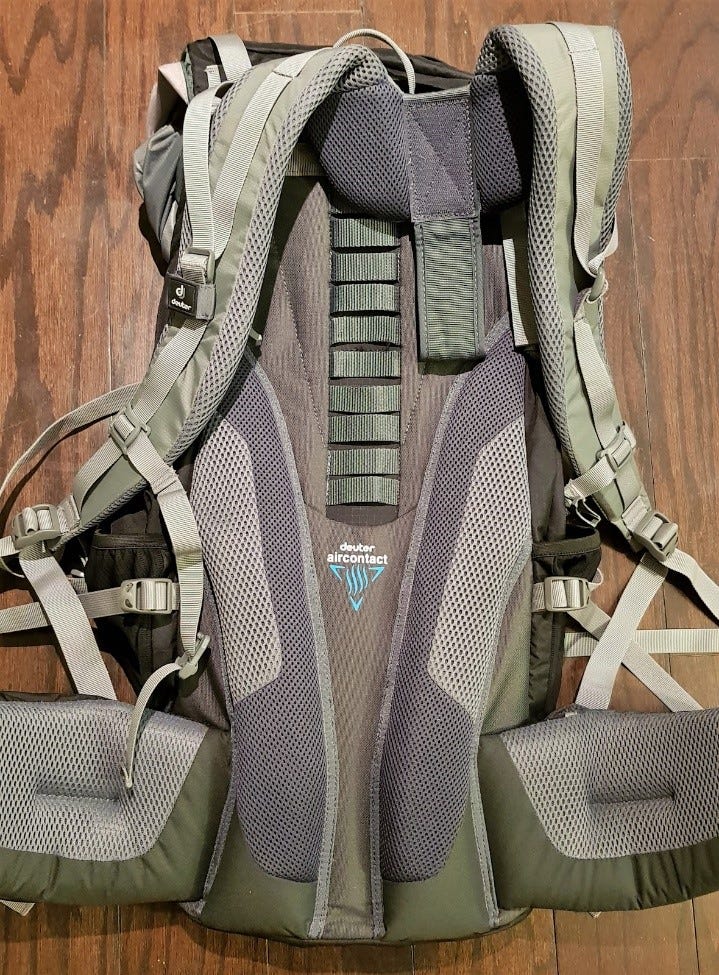
On the other hand, one feature you may have seen in hiking backpacks but not in others is an adjustable torso or back length, which provides a better and more precise fit. Backpacks with fixed back lengths tend to be slightly lighter as they don't have the additional weight of the adjustable system, but obviously, with the fixed length, you'll need to make sure it fits you correctly before buying. When adjusting the back length, you'll need to find the balance where it is not so short that the hip belt cannot effectively take weight off your shoulders, but also where it's not so long that the weighted backpack leans away from your body and pulls you backwards.
Manufacturers are even coming out with innovations for sternum straps. For example, the clasping mechanism on the sternum straps are normally plastic buckles to slide and click together. Recently, some newer backpacks have started using magnetic buckles instead. When designed well, the magnets make buckling the sternum strap easier and possibly even a one-handed task.
Additional small features add further to the functionality and organization of the shoulder straps. A few examples:

Alright! If you made it all the way down here, you're either a masochist or way more interested in shoulder straps than anyone else. In any case, comment below with what YOU look for in shoulder straps or to let us know if we've missed anything!!

Where Can You Buy Shoulder Style Carry Straps
Source: https://pangolinswithpacks.com/the-definitive-guide-that-you-never-wanted-shoulder-straps-26ec3860bbc6
0 Response to "Where Can You Buy Shoulder Style Carry Straps"
Post a Comment