What Can You Teach a Baby Animal to Do

Jump is the perfect time for infant animals to be born! Many animals have babies in the spring since the warmer weather makes it is easier for them to find food to feed them. Warmer atmospheric condition also makes it easier for small babies to survive. Polar bears, who live in climates that are e'er very cold, actually have their babies during the winter while they are hibernating. When spring comes and warms things up a lilliputian, a female parent bear will bring her cubs out of their cozy den for the first time and teach them how to find food for themselves. Other kinds of bears and some other large mammals as well accept babies during the wintertime, since they can nurse their babies and non have to get out their den to find food.
There are lots of different kinds of animals living on earth. That means that at that place lots of very dissimilar kinds of infant animals! Even though nosotros usually think of babies as being pocket-sized and helpless when they are first built-in, that isn't true for all animals. Some animals are very large even when they're commencement born. Sometimes even the smallest ones are able to live on their own without any assist from their parents when they are built-in. Keep reading to learn near some different kinds of animals and different ways that their babies are born and cared for.
Mammals are animals that have pilus or fur, are warm-blooded, and feed their babies with milk. Mammals give live birth, meaning that their babies are born from the mother'south body instead of hatching from an egg. Notwithstanding, at that place are two animals that lay eggs but are even so considered mammals! They are echidnas and platypuses.
Humans, elephants, cats, mice, pigs, rhinoceroses, gorillas, and many other animals are all mammals. Some are huge and some are tiny. Can you lot think of some other mammals?
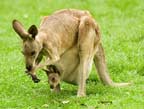 Marsupials such equally kangaroos, koalas, wombats, and opossums are mammals, too! When baby marsupials are built-in, they are very tiny and non also developed as other mammal babies. They live in a fur-lined pouch on the outside of their mother's belly where they nurse (drink milk) and stay safe and warm until they are big enough to come out. Even after the babies can come out of their female parent's pouch, they will however ride around on her dorsum while they abound and larn how to survive on their own. Marsupial babies are called joeys. Nigh all marsupials are nocturnal, which means they are awake at nighttime and sleep during the day. Australia is home to most kinds of marsupials, but opossums do live in other parts of the globe. In fact, the only marsupial that lives in North America is the Virginia Opossum, which can take up to 13 babies at once!
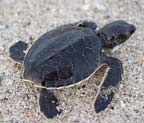 Reptiles are cold-blooded, have backbones, take peel covered with scales, have claws on their feet, and infant reptiles hatch from eggs. A few kinds of snakes and lizards give alive nativity to their babies, but nigh lay eggs. Reptiles are born looking similar smaller versions of their parents and are on their own nigh as shortly as they hatch. Their parents exercise not stay around to take care of them, because they aren't really needed.
Amphibians are like to reptiles, but they live in water for part of their lives and on land for part of their lives. They have moist, slimy peel instead of scales. All amphibians lay eggs and babies look very unlike from their parents when they first hatch. They go through different stages of life in a process chosen metamorphosis . For example, a babe frog is a tadpole that lives in water and looks similar a fish. It gradually grows artillery and legs and becomes an adult frog!
Fish are cold-blooded, have backbones, and lay eggs, just like reptiles and amphibians. Fish'due south bodies are covered in scales. They practice non have any artillery or legs, so they use fins to swim. Fish have gills instead of lungs to help them breathe in water. Some female person fish tin can really give birth to live fish instead of laying eggs! Many kinds of fish do not wait for their eggs to hatch and practise not take care of their babies once the eggs hatch. Yet, some types of fish lay eggs in a nest and guard them very carefully and so accept intendance of the babies until they are large plenty to take intendance of themselves. A baby fish is called a fry and a group or family of fish is called a school.
Birds are warm-blooded and take skeletons and backbones, like mammals. Birds' wings even have basic that are very similar to bones in man arms. However, different mammals, birds are covered in feathers instead of fur or pilus and hatch from eggs. Mother birds build nests to lay their eggs in, then they advisedly sit down on their eggs to continue them warm while the baby birds within abound and develop. Once the babies hatch, female parent and father birds have to piece of work hard to collect enough nutrient to keep their hungry babies fed.
Insects do not take backbones, or any basic for that affair! Instead they have exoskeletons that give their bodies shape and protection. Insects take three body sections, half-dozen legs, two antennae, and two eyes. Many insects likewise take wings. Insects hatch from eggs. Some baby insects expect like smaller versions of their parents and will shed their skin as they grow bigger. Others go through metamorphosis and look and human activity very different from their adult parents when they beginning hatch. For example, did y'all know that a caterpillar is a "baby" butterfly? When a butterfly lays an egg, it volition eventually hatch into a caterpillar, which is called a larva. Then it volition alter into a pupa past spinning a chrysalis around itself and after emerge as an adult butterfly! Many insects, including bees, flies, and beetles, go through metamorphosis. Other insects, like grasshoppers, and arachnids (spiders) molt or shed the outer layer of their skin to abound bigger.
Printable Worksheet
Allow kids match the baby animals to their mothers on this coloring canvas and have the opportunity to review the names of a few different animal babies with your kids. Did you know that a baby platypus is chosen a puggle?

Science Projects
Observing Infant Animals
Spring is a time when many babe animals are born. It is a great fourth dimension to visit a zoo and run across if you lot tin spot whatsoever newborn babe animals. Even if yous don't see any make-new babies, it is fun to see older babies that were born last year. If yous get to visit a zoo this spring, take this list along to assist you observe the babe animals and their parents. Watch to come across how much they depend on their parents and how they are different from developed animals. You can also enquire zoo keepers some of your questions if you lot can't find out just by watching the animals.
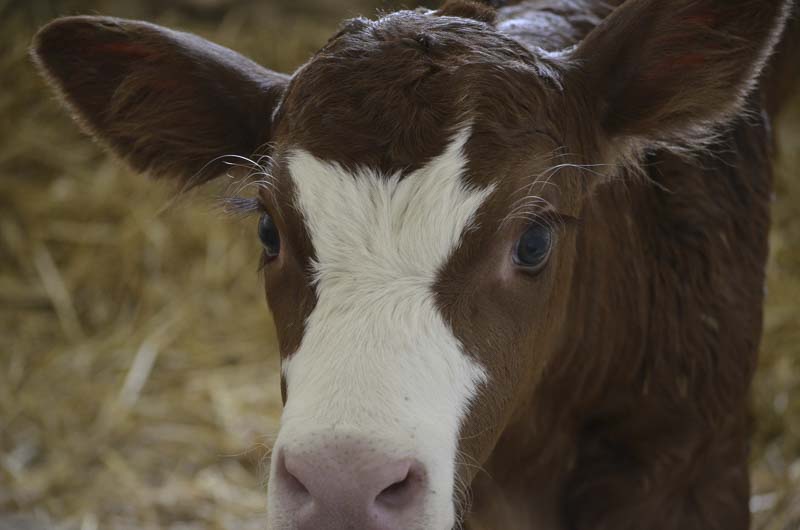
Even if you don't alive almost a zoo or can't visit one, you can watch animals in your one thousand or at a park. Common animals like squirrels, rabbits, chipmunks, frogs, and birds accept babies in the spring, too!
(Note to Parents: This website lists many zoos and wildlife centers effectually the U.s.a..)
Questions about Baby Animals:
- Do the babies stay shut to their parents? Practise they sometimes wander abroad on their own to play or expect for food?
- Do the female parent or father animals feed their babies and take intendance of them? (Most birds and mammals practise but reptiles and amphibians normally don't.)
- What do the baby animals eat? Do they consume the aforementioned food as their parents?
- Can the babies walk, run, or swim on their own?
- Exercise the parents acquit their babies effectually? (Monkeys and koalas practise. Even cats and dogs sometimes carry their young!)
- Practice other adult animals, besides the mother or begetter, help have care of the infant animals? (Families of gorillas and elephants usually assist with baby animals.)
- Tin can you retrieve of some means that animal babies are similar to human being babies?
- What are some ways that animal babies and homo babies are different?
 Night Eyes
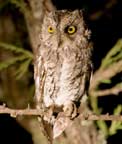
Some animals sleep all day and wake upwards when it gets dark! Raccoons, hedgehogs, owls, some kangaroos, snapping turtles, tigers, foxes, seals, opossums, and lots of other animals are about active at night and are called nocturnal . How well tin yous see at nighttime? How practise nocturnal animals meet to hunt and find their way around in the dark? Do these simple experiments to learn more nearly optics and seeing in the dark.
What You Need:
- a lamp
- a small mirror
- a dark room
Part ane – What You lot Do:
i. Expect at your optics in the mirror. Look at the nighttime spot, chosen a pupil, in the heart of each center. Notice its size.
ii. Make the room as dark as yous can by turning off the lights and closing the shades. It's okay if in that location is some light, but if information technology is nonetheless very brilliant, try going in a closet or room with no windows.
three. Plug in the lamp and sit nigh information technology just don't look at it. Expect at your pupils again in the mirror. Now agree your mirror towards the low-cal and look in it (don't expect directly at the light bulb as it may hurt your eyes). Did your pupils get smaller?
4. Now turn then that your back is to the lamp. Await in the mirror again. Did your pupils get larger afterward you turned away from the effulgence of the lamp?
What Happened:
A pupil is the function that allows light into the eye so that another part, called the retina, tin create an image of what the eye is looking at. When pupils expect largest, they are open the widest. More low-cal goes into the centre and reaches the retina when the pupil is open broad. Less light goes in when the pupil is closed more than and looks smaller. The retina is very sensitive to light, so part of the pupil's task is to protect the retina from getting more light than information technology needs.
When yous looked toward the lamp, your pupils got very small because they were exposed to a lot of light. They didn't need that much lite in gild to assist you see clearly in the darkened room, then they got smaller to adjust how much lite got to your eyes. When y'all turned away from the light, not as much low-cal could get into your optics, making information technology harder to see clearly. Your pupils reacted by opening wider to allow more than light come in to help you see better in the darker part of the room!
Office 2 – What Yous Do:
1. Get into a very dark room, like a cupboard or bathroom without windows. It should seem pretty blackness in there. (Yous can take a friend, sibling, or parent with you lot!)
2. Sit for a few minutes and see if you can start to come across some of the things in the room.
3. Once you experience like your eyes have adjusted to the darkness, plough on a calorie-free. Does information technology seem brighter than normal?
What Happened:
Subsequently being in the nighttime room for awhile your eyes adjusted to the darkness and yous were probably able to find your way around and see the shapes of objects in the room. When y'all turned the light on, it probably seemed a lot brighter than it would have if you had been in a room with some light. Did the light hurt your eyes or make you lot squint? Was information technology harder to focus on things when the low-cal outset came on? Your eyes got used to the nighttime and were more than sensitive to light than normal, making it hard to see conspicuously.
That'due south exactly what it is like for nocturnal animals all the time during the day when there is lots of light. Their eyes just can't handle the brightness similar ours can.
After a few minutes, you probably noticed that you could see just fine in the light. If you went back into the night room, you would accept institute that information technology was again very nighttime in there and hard to see annihilation. This is because your optics work improve in the calorie-free, even though they can adapt to aid y'all see when it'south nighttime.
Something similar happens in reverse after being outside on a very bright, sunny 24-hour interval. When yous come within, fifty-fifty if all the lights are on, information technology might seem like it is very dark. That's because it is night inside compared to outside. Your eyes had gotten used to the actress light while you were in the sun and had to re-arrange to less low-cal when you lot came back inside.
Nocturnal animals' eyes aren't able to adjust to bright lights the fashion ours can, and our optics tin't suit to darkness besides every bit theirs can. Their eyes are designed for seeing very well when there isn't much low-cal, merely they don't work very well for seeing in really bright light! To aid protect their eyes from even pocket-size amounts of bright light, some nocturnal animals have a special second eyelid that they can close to cover their eyes and completely block out light. This helps them slumber during the twenty-four hour period and also helps protect their optics if they are exposed to bright light by blow.
Source: https://learning-center.homesciencetools.com/article/learn-about-baby-animals/
0 Response to "What Can You Teach a Baby Animal to Do"
Post a Comment